 Special Topic Home

Category
Products News
 How does a transformer work?
Related searches
35kv power transformer
electric furnace transformer
electrical transformer for sale
high current transformer
Supplier Searches
Home > Products News
How do power transformers come from?
2017/6/12 12:47:40
.jpg)
History is characterized by a series of great inventions that sweep the society and become a stepping stone in the rise of the modern world. Most people will agree with the fire, wheels, modern traffic and communication systems, and eventually the Internet has a list of places under this list. There may be fewer individuals, but the same arches are due to a lot of power transmission and long delivery. This break does not have no transformer. In the first position of the three positions, I will briefly introduce the history behind the power transformer.
Around 130 years ago a technical revolution took place that was to be a vital step in the development of modern society. That revolution was the commercial generation, transmission and usage of electrical energy. Nobody today can imagine a world without electricity. However, I will start by taking you back to the early days when pioneers like Thomas Edison and George Westinghouse – and their ideas were competing for the transmission system of the future: Should it be DC or should it be AC?
Very early electrical installations were local: The sites of generation and consumption were at most a handful of kilometers apart: Direct connections from the steam or hydro generators to the consumers were in the range of hundreds of volts. In the early 1880s, for example, the “Edison Illuminating Company” supplied 59 customers in Lower Manhattan with electricity at 110 V DC. But the energy demand of the fast growing cities and industrial centers called for an increase in power transmission capability.
The small steam and hydro generators were no longer sufficient and larger power plants were erected more remotely from the cities. Voltage levels had to be increased to keep nominal currents on the power lines moderate and reduce losses and voltage drops. This was the time of the birth of a new component: the power transformer.
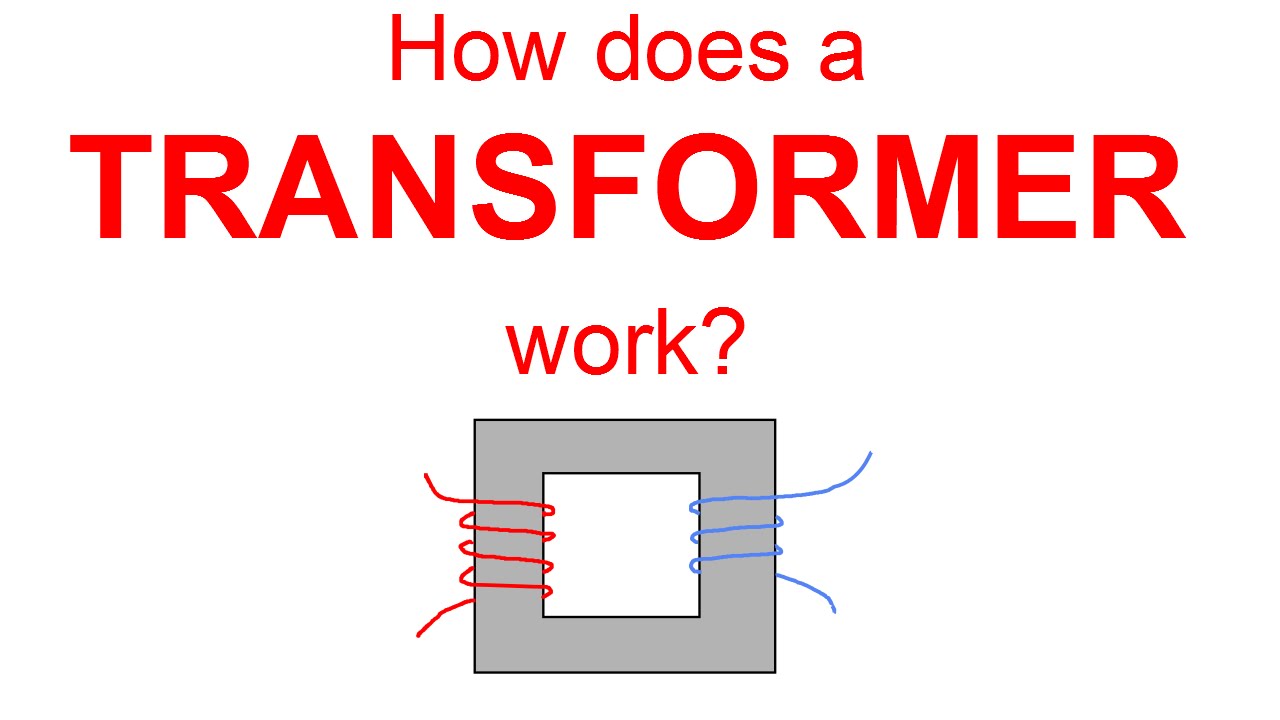
In a power transformer, two coils are arranged concentrically so that the magnetic field generated by the current in one coil induces a voltage in the other. This physical principle can only be applied in AC systems, as only a time-varying magnetic field is able to induce a voltage. By using a different number of winding turns in the two coils, a higher or lower voltage can be obtained.
In the power transformer, two coils are prepared concentrically so that the magnetic field generated by the current in one coil generates a voltage in the other coil. This type of physics can only be used in AC systems because only time-varying magnetic fields can induce voltage. By using a different number of windings in the two coils, a higher or lower voltage can be obtained.
Article from:
https://www.abb-conversations.com/